
Water Damage
How Professionals Know When Water Damage Is Actually Dry
By Cleaner Guys · · 5 min read
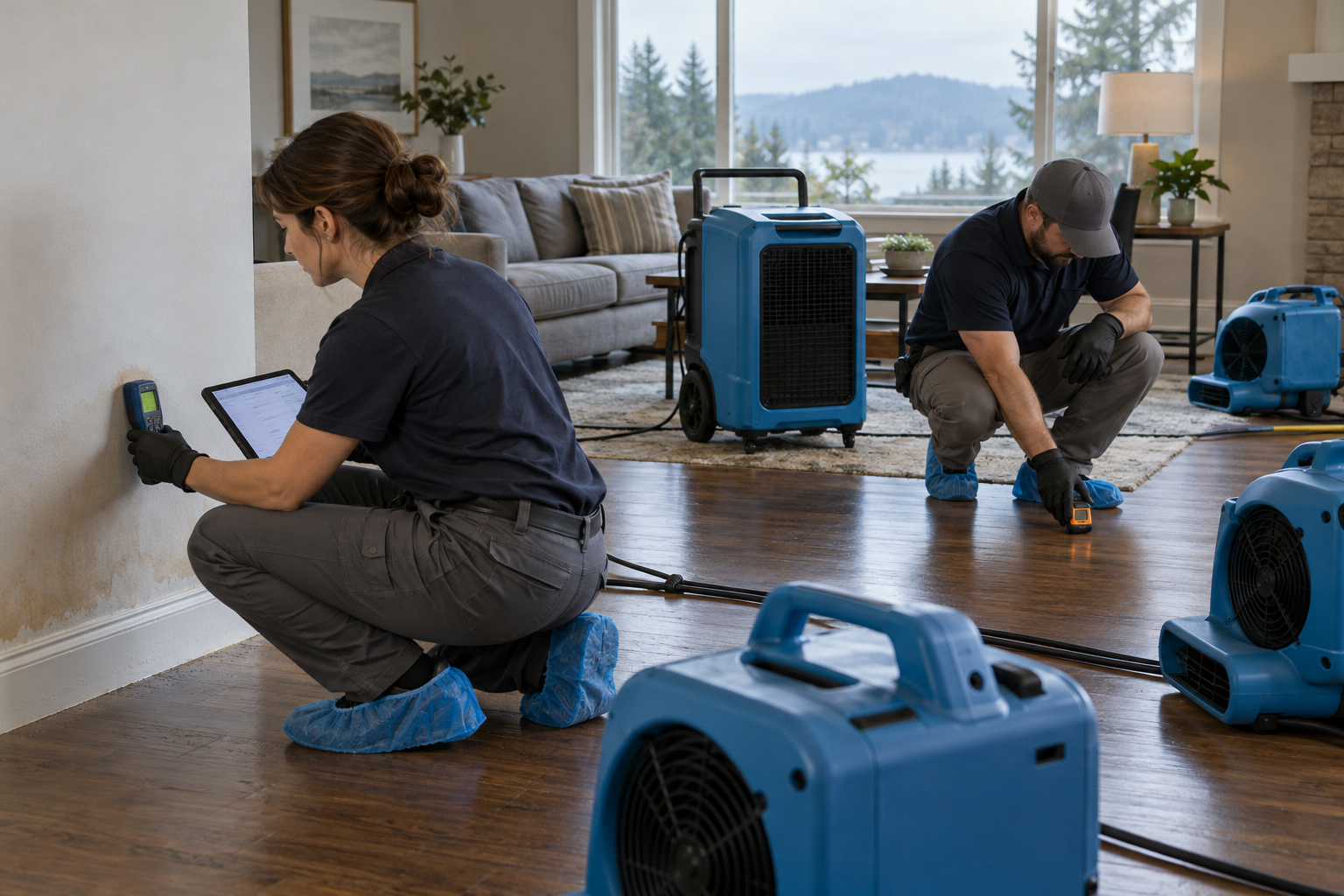
A surface can look dry while moisture remains inside the structure. After extraction, water may still be held in drywall, wood framing, insulation, subflooring, and other porous materials. Professional water damage restoration in Mount Vernon uses measured drying goals and follow-up readings to confirm progress rather than relying on appearance or touch.
Extraction removes water but drying continues
Pumps and extractors remove standing water and moisture held near the surface. The next phase addresses water that has moved deeper into building materials. Air movers support evaporation, while commercial dehumidifiers collect moisture from the air. The equipment works as a system, and its placement depends on the affected materials, room layout, and conditions found during the initial assessment.
The initial moisture map creates a baseline
Technicians begin by identifying which rooms and materials are affected. Moisture meters help confirm conditions in drywall, wood, and flooring, while other inspection tools may help locate areas that deserve closer testing. These readings create a baseline and show where drying equipment should be concentrated. They also help distinguish affected materials from nearby areas that did not absorb water.
Daily readings show whether the plan is working
Drying conditions change from day to day. Follow-up measurements show whether moisture levels are moving in the right direction and whether airflow or dehumidification needs to be adjusted. If one wall or section of flooring stays wet while surrounding materials improve, the team can investigate trapped moisture, hidden layers, or limited air movement instead of assuming the entire room is ready.
Dry does not mean one universal number
Different materials hold moisture differently, so a single reading does not define every job. Technicians consider the material type, unaffected comparison areas, indoor conditions, and the pattern of readings over time. The goal is to return affected materials to an appropriate dry condition for that property, not simply to run equipment for a predetermined number of days.
Drying logs document the recovery
A drying log records the affected areas, equipment used, and moisture readings collected during the project. This gives the property owner a clearer explanation of what changed and why equipment remained in place or was removed. The records may also support communication with an insurance adjuster, depending on the cause of damage and the terms of the policy.
Final readings confirm the drying phase is complete
Before equipment is removed, technicians compare final readings with the original moisture map and suitable reference conditions. The result is a documented decision rather than a visual guess. Cleaner Guys provides 24/7 extraction, structural drying, moisture monitoring, and insurance documentation throughout Mount Vernon and Skagit County, including Burlington and Anacortes.
Water damage in your home or property? Call Cleaner Guys at 360-757-4300 for 24/7 emergency water damage assistance. The team can extract standing water, map affected materials, establish a structural drying plan, and monitor moisture until the drying phase is complete.